
JSON-LD makes product information machine-readable
A product page combines many types of information: product name, brand, price, availability, reviews, and more. People can understand those details from layout and context. Search engines and AI systems benefit from a clearer description of what each value means.
JSON-LD is a structured-data format that expresses page information through standardized properties. It does not replace the visible product page. It adds a machine-readable layer that helps systems interpret the product and its attributes.
A simple Product schema example
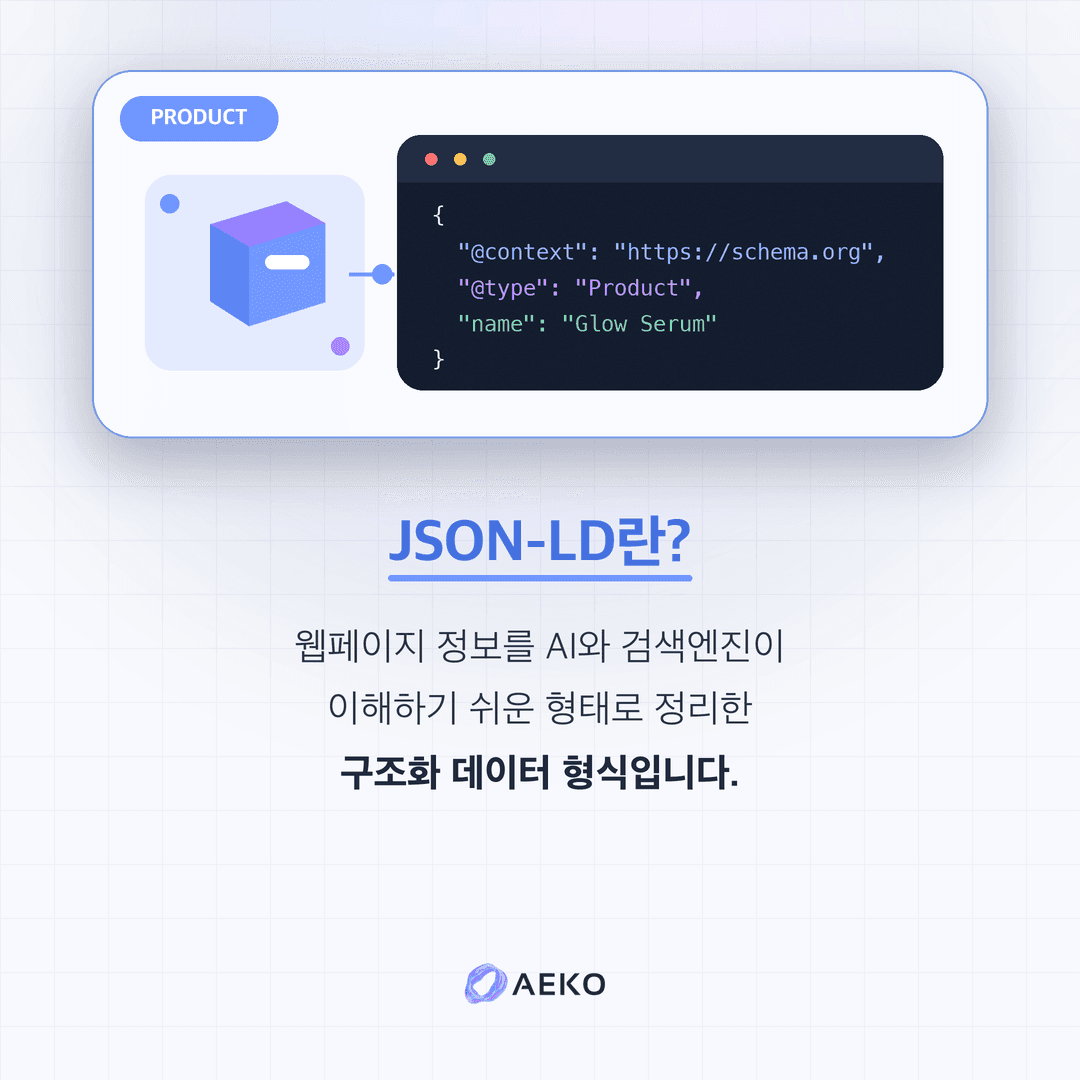
This simplified example includes a product name, brand, and offer. A production page should use values that match the visible content and add the relevant properties needed to describe the actual product accurately.
{
  "@context": "https://schema.org",
  "@type": "Product",
  "name": "AEKO Sample Serum",
  "image": "https://example.com/images/aeko-sample-serum.jpg",
  "brand": {
    "@type": "Brand",
    "name": "AEKO"
  },
  "offers": {
    "@type": "Offer",
    "price": "29.00",
    "priceCurrency": "USD",
    "availability": "https://schema.org/InStock"
  }
}
Present does not mean complete
Finding JSON-LD on a page does not prove that its structured data is complete. The markup may contain only a product name and price, or its price and availability may no longer match the page customers see.
Accuracy and completeness matter more than the number of properties. Describe useful, visible facts consistently: name, brand, description, image, SKU, offers, and reviews when they genuinely exist on the page.
JSON-LD does not guarantee an AI citation. It is a technical foundation that makes product information easier for machines to understand and compare.
How to find it on your site
- 1. Open a product page in Chrome.
- 2. Open Developer Tools and select Elements.
- 3. Press Command + F on Mac or Ctrl + F on Windows.
- 4. Search for
ld+json.
Expand the matching script type="application/ld+json" block to see which schema types and properties the page provides.
Compare with brands that AI systems mention
When ChatGPT, Gemini, or another AI system mentions a brand, open one of that brand's product pages and inspect its JSON-LD. Comparing it with your store can reveal not only whether markup exists, but also which product details the other page expresses more clearly.
Do not treat a single comparison as proof of why a brand was cited. Structured data is one signal among content quality, external sources, and brand authority. Use the comparison to find missing fields and differences in product expression—not to claim causation.
Sources
Continue in AEKO
Follow the steps to apply this topic to your work.